
General
Aqua Green Laminate: Stylish Ideas for Modern Interiors

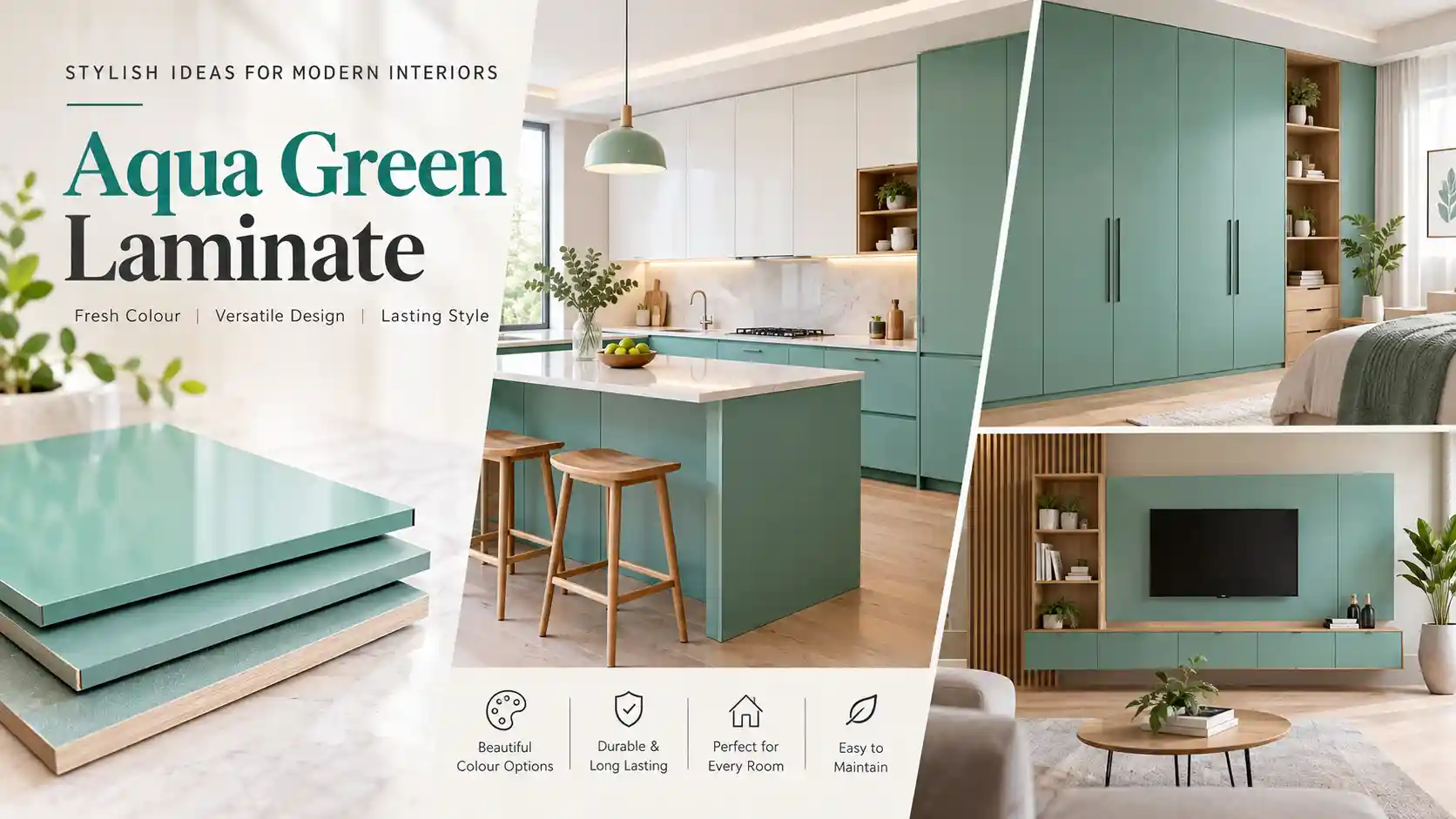
Aqua Green Laminate: Stylish Ideas for Modern Interiors
I believe colour can completely change the character of an interior without requiring a complete renovation. Among the many shades available for modern furniture and cabinetry, aqua green laminate has an interesting balance between freshness, softness and visual character. It sits between blue and green, giving interiors a clean appearance while still adding enough colour to prevent a room from feeling ordinary.
From my perspective, aqua green laminate works particularly well when homeowners want something more distinctive than white, grey or beige but do not want an extremely strong colour dominating the entire room. It can be used on kitchen cabinets, wardrobes, storage units, wall panels, furniture, doors and other interior surfaces.
The important point is not simply choosing aqua green. I have found that the success of any coloured laminate depends on how the shade is combined with lighting, surrounding materials, room size, hardware and finish. A well-planned combination can make the colour feel sophisticated, while poor proportions can make even an attractive shade feel overwhelming.
In this guide, I will explain what aqua green laminate is, where I would use it, which finishes can work best, what colours complement it, how to select the right shade, and what practical considerations I would review before making a final decision.
Key Takeaways for Choosing Aqua Green Laminate
Aqua green laminate can be used across several areas of a modern home, including kitchens, wardrobes, living-room furniture, study units and decorative wall surfaces.
I consider the finish almost as important as the colour itself. Glossy surfaces can create a brighter and more reflective appearance, while matte or suede finishes generally create a softer and more understated effect.
The surrounding colour palette also matters. White, off-white, light grey, natural wood tones, black accents and selected metallic finishes can all be considered when developing an aqua green interior.
For a small room, I would usually avoid covering every visible surface with a strong colour. Using aqua green on selected cabinets or lower units while keeping other surfaces light can create a more balanced result.
I also recommend checking a physical laminate sample before ordering. Digital screens can display colours differently, so the shade seen on a phone or computer should not be treated as the final reference.
What Is Aqua Green Laminate?
Aqua green laminate is a decorative surface material featuring an aqua-green colour that can be bonded to furniture boards, cabinet shutters, panels and other suitable substrates. Depending on the manufacturer and collection, the material can be available in different thicknesses, surface textures, colours and finishes.
The colour itself is what makes the material distinctive. Aqua green generally combines characteristics associated with both blue and green. That gives it a refreshing appearance that can work with contemporary, coastal, minimalist and transitional interiors.
In my view, one of the biggest advantages of this colour is its flexibility. It does not necessarily need to be used as the dominant colour in a room. It can become a feature colour, a secondary cabinet colour or an accent within a larger neutral palette.
For example, imagine a kitchen with white upper cabinets, aqua green lower cabinets and a light countertop. The aqua green creates visual interest while the white keeps the upper part of the kitchen visually light.
Another approach would be to use aqua green only on an island. In that situation, the island becomes the focal point without requiring the entire kitchen to use the same colour.
Why Aqua Green Laminate Works in Modern Interiors
Colour selection is ultimately subjective, but I believe aqua green has a useful middle ground. Very bright greens can become visually dominant, while very pale colours can sometimes disappear into the background. Aqua green can occupy a position between these extremes.
The exact effect depends on the specific shade. A pale aqua green may feel airy and subtle, while a deeper or more saturated version can create a stronger statement.
Lighting also changes how the colour appears. Natural daylight can make some aqua shades look fresher, while warm artificial lighting may make them appear slightly softer or greener.
This is why I would never select a laminate colour based only on a catalogue image. I would place a physical sample in the actual room and observe it at different times of day.
Colour has long been recognised as an important part of visual experience. Wassily Kandinsky wrote:
“Color is a power which directly influences the soul.”
Wassily Kandinsky, Concerning the Spiritual in Art, as reproduced by Khan Academy.
I would not interpret that statement as meaning that one particular colour creates the same emotional response for everyone. Instead, it highlights why colour deserves deliberate consideration when designing an interior. Aqua green can contribute to the overall visual identity of a space, but the surrounding materials and personal preferences remain equally important.
Where Can I Use Aqua Green Laminate?
I would consider aqua green laminate for much more than kitchen cabinets. Its colour and available finishes make it adaptable to different furniture and interior applications.
Aqua Green Laminate for Kitchen Cabinets
The kitchen is one of the most obvious places to use aqua green. Contemporary kitchen examples show the colour being paired with white, quartz, granite, wood tones and contrasting hardware.
One practical approach is to use aqua green on the base cabinets while keeping the wall cabinets white or another light neutral. This creates a two-tone appearance and prevents the colour from taking over the entire kitchen.
Another option is an aqua green island. This works particularly well when the surrounding cabinetry is neutral.
I would also consider the backsplash carefully. If the laminate already provides a strong colour statement, a simple backsplash can prevent the overall composition from becoming visually crowded.
Current kitchen design examples demonstrate aqua green laminate in both high-gloss and suede finishes, including combinations with white and stone-like countertops.
Aqua Green Laminate for Wardrobes
Bedrooms offer another opportunity for this colour.
Aqua green wardrobe shutters can introduce colour without requiring the walls, flooring or bedding to follow the same palette. If the bedroom contains light wood furniture and neutral walls, an aqua wardrobe can become an intentional feature.
For a calm bedroom, I would generally consider a softer or matte aqua green rather than an extremely reflective finish.
A wardrobe can also combine aqua green with white or wood-effect panels. This creates visual variation and can make a large storage unit appear less monolithic.
Aqua Green Laminate for Living-Room Furniture
Living-room furniture can benefit from a controlled use of aqua green.
Instead of covering an entire entertainment unit in the colour, I might use aqua green on selected cabinet fronts and combine it with natural wood or neutral panels.
The same principle can work for sideboards, display cabinets, shelving units and storage furniture.
The goal is to make the colour feel intentional rather than accidental.
Interior designer David Hicks is often associated with the observation:
“The best rooms have something to say about the people who live in them.”
David Hicks, quoted by the National Kitchen & Bath Association.
For me, that is particularly relevant when selecting a distinctive laminate colour. A coloured cabinet should reflect the atmosphere the homeowner wants rather than simply following a temporary trend.
Aqua Green Laminate for Wall Panels
Aqua green can also be considered for decorative wall applications.
A full feature wall can create a strong visual effect, but I would usually assess the size of the room and amount of natural light first.
Another approach is partial wall panelling. A smaller aqua green section behind a console, television unit or dining area can introduce the colour without making the room feel saturated.
Aqua Green Laminate for Office Furniture
Home offices often rely heavily on neutral colours. Adding aqua green to selected storage units, shelves or desk cabinetry can introduce personality without compromising the functional appearance of the workspace.
For a professional-looking office, I would combine aqua green with white, light grey, natural timber or black hardware.
Choosing Between Matte, Suede and Glossy Aqua Green Laminate
The finish changes the visual character of the same colour.
A glossy finish reflects more light and can give cabinetry a polished contemporary appearance. It can work especially well in kitchens where the goal is a bright, modern aesthetic.
A matte finish reduces reflection and often produces a calmer appearance. I would consider matte aqua green when the colour itself should remain the main visual feature rather than the shine of the surface.
A suede or textured finish provides another option. It can introduce subtle surface character and may be suitable when a softer, more tactile appearance is preferred.
Current aqua green laminate products are available in multiple finishes, including high-gloss, matte, suede and textured options.
Finish Comparison Table
Before selecting a finish, I would compare the practical and visual differences rather than choosing based only on a product photograph.
| Finish | Visual Character | Where I Would Consider It | Main Consideration |
|---|---|---|---|
| High Gloss | Bright, reflective and contemporary | Modern kitchens, feature cabinets, furniture | Reflections and visible marks may be more noticeable |
| Matte | Soft and understated | Bedrooms, wardrobes, modern kitchens | Can create a calmer appearance |
| Suede | Smooth with a softer visual effect | Kitchens, wardrobes and furniture | Shade can look different under changing light |
| Textured | Adds surface interest | Feature furniture, wall panels and cabinets | Surrounding patterns should remain controlled |
| Acrylic-style | Rich colour depth and polished appearance | Premium-looking furniture and cabinetry | Physical samples are important before selection |
The main takeaway is that there is no single universally correct finish. I would choose according to the room, lighting, maintenance expectations and overall design direction.
Best Colour Combinations With Aqua Green Laminate
Aqua green becomes much easier to use when the surrounding colours are planned in advance.
Aqua Green and White
White is one of the simplest combinations.
White upper cabinets with aqua green lower cabinets can create a fresh two-tone kitchen. The same concept can be applied to wardrobes and storage furniture.
I particularly like this approach when the room is relatively small because the white areas can help maintain visual openness.
Aqua Green and Natural Wood
Natural wood tones can make aqua green feel warmer.
Aqua green cabinet fronts combined with oak-like, walnut-like or other natural wood finishes can produce contrast between cool colour and warm material.
I would keep the wood tone consistent rather than introducing several unrelated wood finishes into the same room.
Aqua Green and Light Grey
Light grey can create a restrained contemporary palette.
This combination is useful when white feels too stark but a dark contrast feels too heavy.
Aqua green cabinetry with a light-grey wall or countertop can create a subtle transition between the two colours.
Aqua Green and Black
Black hardware, fixtures or selected furniture details can provide strong contrast.
However, I would use black deliberately. Too much black alongside a saturated aqua green can make a small space feel visually heavy.
Black handles, lighting fixtures or a few accessories can be enough.
Aqua Green and Beige
Beige and warm neutrals can soften aqua green.
This is worth considering when the goal is to create a warmer interior rather than a strongly cool colour scheme.
How Room Size Affects Aqua Green Laminate Selection
Room size should influence how much colour is used, although it should not automatically determine whether aqua green is suitable.
In a small kitchen, I would consider using aqua green on lower cabinets and keeping the upper cabinets light. This creates a visual boundary while allowing the upper portion of the room to remain bright.
In a larger kitchen, there is more opportunity to use aqua green across multiple cabinet sections or an island.
A large bedroom could accommodate an aqua green wardrobe more easily than a very small bedroom with several other strong colours.
The same principle applies to living rooms. A small entertainment unit may need only a few aqua green panels, while a larger open-plan space may support a more substantial feature.
The important factor is proportion.
How Lighting Changes Aqua Green Laminate
Lighting can significantly influence how a colour appears.
Natural daylight changes throughout the day. Morning light, afternoon light and evening artificial lighting can all produce different impressions.
I recommend placing a laminate sample near a window, under room lighting and beside the materials that will surround it.
This simple process can reveal differences that are difficult to notice in a showroom or online catalogue.
Warm lighting may make aqua green appear somewhat softer or greener, while cooler lighting can emphasize its blue-green character.
The direction of natural light also matters. A room receiving strong direct sunlight may show the laminate differently from a darker room.
Because manufacturers themselves may note that digital images do not perfectly represent physical colours, I consider physical sampling an important step before final selection.
Aqua Green Laminate in Small Kitchens
Small kitchens require careful colour distribution.
I would not automatically reject aqua green simply because the kitchen is small. Instead, I would control where the colour appears.
One practical design scenario is:
- Aqua green lower cabinets
- White upper cabinets
- White or light quartz countertop
- Simple backsplash
- Minimal hardware
- Good task lighting
- Light flooring
This arrangement gives aqua green a clear role without making every surface compete for attention.
Another option is to use aqua green only on one section of cabinetry.
If the kitchen already contains patterned flooring or a decorative backsplash, limiting the laminate colour can create a cleaner overall composition.
Aqua Green Laminate in Large Kitchens
Large kitchens provide more flexibility.
Aqua green can be used on base cabinets, tall storage units or an island. It can also be combined with natural wood or neutral cabinetry.
For an open-plan kitchen, I would consider how the colour interacts with the living and dining areas. Because there are fewer visual boundaries in an open-plan layout, a strong kitchen colour can influence the appearance of the entire connected space.
This can be useful when the same colour appears in smaller details elsewhere, such as cushions, artwork or decorative accessories.
The objective is not necessarily to match everything. Instead, the colour can create a visual connection between different parts of the home.
Practical Durability and Maintenance Considerations
Laminate is commonly selected for furniture and cabinetry because it can provide a decorative surface without requiring painted finishes.
However, the exact performance depends on the specific product, substrate, installation and manufacturer specifications.
Some manufacturers offer laminate products with properties such as resistance to scratching, staining, heat or moisture. These claims should always be checked against the technical documentation for the exact laminate being purchased.
For everyday cleaning, manufacturers commonly recommend a soft or non-abrasive cloth and an appropriate mild cleaning solution. Formica, for example, describes its laminate surfaces as easy to clean and recommends a damp, non-abrasive cloth with mild liquid detergent for routine cleaning.
I would avoid assuming that every aqua green laminate has identical resistance characteristics. Two products can share a colour name while having different construction, finish and technical specifications.
Common Mistakes When Choosing Aqua Green Laminate
One mistake is choosing the colour from a screen without checking a physical sample.
Another is using too many competing colours. Aqua green already provides visual identity, so adding several strong colours can create unnecessary competition.
A third mistake is ignoring the finish. The same colour can appear completely different in high gloss, matte or textured form.
A fourth mistake is selecting hardware without considering the laminate. Black, brass, silver and other finishes can each produce different visual results.
Another common issue is failing to consider lighting. A shade that looks perfect in a showroom may look different under the lighting conditions of the actual room.
Finally, I would avoid selecting laminate only because it is currently popular. A colour should make sense for the space and for the people who will use it.
Step-by-Step Guide to Selecting Aqua Green Laminate
Step 1: Define the Application
First, determine exactly where the laminate will be installed.
A kitchen cabinet, wardrobe, wall panel and office cabinet have different practical requirements.
Step 2: Decide How Much Colour You Want
Choose whether aqua green will be the main colour, secondary colour or accent.
This decision helps narrow the number of possible combinations.
Step 3: Select the Finish
Compare matte, gloss, suede and textured options.
Think about how the finish will interact with lighting and how much visual reflection you want.
Step 4: Select Complementary Materials
Choose the countertop, backsplash, flooring, handles and surrounding furniture before finalising the colour.
Aqua green should be considered as part of the complete composition.
Step 5: Test a Physical Sample
Place the actual laminate sample in the room.
Check it during daylight and artificial lighting.
Step 6: Review Technical Specifications
Check the manufacturer’s information for thickness, surface properties, application suitability, maintenance requirements and any relevant resistance ratings.
Step 7: Confirm the Final Layout
Only after the colour and materials have been evaluated together would I move to final ordering and installation.
What Should You Compare Before Buying Aqua Green Laminate?
The following comparison can help organise the decision.
| Selection Factor | Questions to Ask | Why It Matters |
|---|---|---|
| Colour | Is the aqua shade too blue, too green or balanced? | Colour perception changes the overall design |
| Finish | Gloss, matte, suede or textured? | Finish changes reflection and visual character |
| Application | Kitchen, wardrobe, furniture or wall? | Different applications may have different requirements |
| Thickness | What thickness does the manufacturer specify? | Thickness can affect application suitability |
| Durability | What resistance properties are documented? | Helps match the product to everyday use |
| Maintenance | What cleaning method is recommended? | Helps avoid damaging the surface |
| Lighting | How does the sample look throughout the day? | Lighting changes colour perception |
| Compatibility | Does it work with the countertop and flooring? | Prevents conflicting materials |
| Sample | Have I seen the physical sheet? | Screen colours are not reliable final references |
| Warranty | What does the supplier or manufacturer cover? | Provides useful purchasing information |
The most important lesson is that colour should not be the only purchasing criterion. I would evaluate the complete specification and the intended application together.
Expert Design Considerations for Aqua Green Laminate
I believe restraint is particularly important when working with a distinctive colour.
If aqua green is being used on a kitchen island, I would allow the island to become the main visual feature instead of adding several other bold elements.
If the colour is being used on wardrobes, neutral walls and bedding can create balance.
If it is being used on a living-room cabinet, natural wood and neutral upholstery can soften the overall composition.
The idea is not to make every component interesting. Some elements can provide visual rest.
A design quote from Steve Jobs, reproduced by the National Kitchen & Bath Association, states:
“Design is not just what it looks like and feels like. Design is how it works.”
I find this principle particularly useful when choosing laminate. A beautiful colour is only one part of the decision. The finished furniture should also work practically within the room.
Can Aqua Green Laminate Look Timeless?
I would avoid describing any specific colour as permanently timeless because design preferences change.
However, aqua green can be used in ways that reduce dependence on short-term trends.
For example, using the colour on cabinet fronts while keeping the countertop, flooring and major architectural elements neutral makes future changes easier.
If the homeowner later changes handles, lighting or accessories, the main cabinetry can remain the visual foundation.
The strongest approach is therefore not trying to predict whether aqua green will remain fashionable forever. Instead, I would create a balanced design where the colour works because of its relationship with the rest of the room.
How to Make Aqua Green Laminate Feel More Premium
A premium appearance does not necessarily require using the most expensive colour or finish.
Proportion, alignment and material coordination have a major impact.
I would focus on clean cabinet lines, consistent hardware, suitable lighting and carefully selected complementary materials.
For example, aqua green cabinetry combined with a simple light countertop and restrained hardware can look more sophisticated than a design containing many expensive but competing finishes.
The quality of installation also matters. Poorly aligned cabinet doors can undermine the appearance of even a high-quality laminate.
This is why I would treat the laminate as one component of a complete interior rather than the entire design solution.
Aqua Green Laminate for Commercial Interiors
Although residential kitchens and wardrobes are common applications, aqua green can also be considered for selected commercial environments.
Offices, reception areas, retail displays, cafés and other interiors can use colour to establish a particular visual identity.
In commercial spaces, however, I would pay particular attention to durability, cleaning requirements, traffic levels and manufacturer specifications.
A feature wall or reception counter may benefit from aqua green without requiring every piece of furniture to use the colour.
The same principle of controlled colour application applies here: one strong visual element can be more effective than many competing ones.
How I Would Approach an Aqua Green Interior
If I were planning an aqua green interior, I would start with the room rather than the laminate catalogue.
First, I would examine natural light, room dimensions and existing finishes.
Then I would decide where colour is actually needed.
After that, I would compare several aqua green samples instead of selecting the first shade that looks attractive online.
I would place those samples beside the countertop, flooring, wall colour and hardware.
Only after seeing the complete combination would I choose the final laminate.
This process may appear slower, but I believe it reduces the chance of making an expensive aesthetic mistake.
Conclusion
I believe aqua green laminate can be a practical way to introduce colour into a modern interior without making the entire room visually overwhelming. Its blue-green character gives homeowners an alternative to standard whites, greys and wood finishes, while its availability across different laminate finishes creates additional design flexibility.
The strongest results, in my view, come from controlling proportion. Aqua green does not have to cover every cabinet or wall. It can be used on lower kitchen cabinets, an island, wardrobe shutters, a media unit, office storage or a selected feature wall.
I would also give equal attention to finish, lighting, surrounding colours and product specifications. A physical sample should be checked in the actual room before the final order is placed.
If you are considering aqua green laminate, my practical recommendation is to start with the application, choose the desired finish, compare complementary materials and test the colour under real lighting. That approach allows the laminate to become part of a cohesive interior rather than simply becoming a colour added to the room.
Read More: Ambass A Door: Meaning, Brands, Types, Features & Guide
Frequently Asked Questions
What is aqua green laminate?
Aqua green laminate is a decorative laminate surface featuring an aqua-green colour. It can be applied to suitable furniture boards, cabinetry, wardrobes, wall panels and other interior surfaces. The exact appearance depends on the manufacturer, shade and finish. I recommend checking the technical specifications of the individual product because thickness, surface properties, maintenance instructions and resistance characteristics can differ between products.
Is aqua green laminate good for kitchen cabinets?
Yes, aqua green laminate can be used for kitchen cabinets when the selected product is suitable for the intended application. Current kitchen designs demonstrate aqua green laminate in both high-gloss and softer finishes. I would usually consider pairing it with white, light grey, natural wood or a light stone-effect countertop. The final choice should also account for lighting, cabinet proportions and the manufacturer’s technical specifications.
What colours go well with aqua green laminate?
White, off-white, light grey and natural wood tones are among the easiest colours to combine with aqua green laminate. Black hardware can create stronger contrast, while beige and warm neutrals can make the colour feel softer. I would select the surrounding palette according to the room’s lighting and existing materials rather than relying on a fixed colour formula.
Is aqua green laminate suitable for small kitchens?
Aqua green laminate can work in a small kitchen when the colour is distributed carefully. One practical approach is to use aqua green on lower cabinets while keeping upper cabinets white or another light shade. A light countertop and relatively simple backsplash can further reduce visual competition. I would always test the actual laminate sample in the kitchen before making the final decision.
Should I choose matte or glossy aqua green laminate?
The choice depends on the appearance you want. Glossy aqua green laminate can create a brighter, more reflective contemporary effect, while matte or suede finishes can produce a softer appearance. I would compare physical samples under the room’s actual lighting before deciding because the same aqua shade can look noticeably different depending on its surface finish.
Can aqua green laminate be used for wardrobes?
Yes, aqua green laminate can be used on wardrobe shutters when the selected product is appropriate for furniture applications. In a bedroom, I would consider combining aqua green wardrobe fronts with neutral walls, light flooring and natural wood or white furniture. A matte or softer finish can be particularly useful when the goal is to create a calm bedroom environment.
How do I clean aqua green laminate?
Cleaning instructions depend on the specific laminate, so I would follow the manufacturer’s care instructions first. Many laminate manufacturers recommend routine cleaning with a soft, non-abrasive cloth and a mild cleaning solution. I would avoid aggressive chemicals, abrasive materials or cleaning methods that are not approved for the particular product.
Does aqua green laminate work with wood?
Yes, aqua green laminate can work effectively with natural or wood-effect finishes. The cool blue-green colour can contrast with warmer wood tones, creating a balanced combination. I would generally keep the number of wood finishes controlled so that the room does not contain too many competing patterns or tones.
How can I make aqua green laminate look modern?
I would focus on simple cabinet forms, clean lines, coordinated hardware and a restrained colour palette. Aqua green can be paired with white, light grey, natural wood or selected black details. The finish also matters: high gloss can produce a polished contemporary appearance, while matte and suede finishes can create a softer modern aesthetic.
Should I buy an aqua green laminate after seeing it online?
I would not make the final colour decision from an online image alone. Different screens can display colours differently, and lighting can change how a laminate appears. A physical sample should be viewed in the intended room alongside the countertop, flooring, wall colour and other materials. This is especially important when choosing a specific aqua shade.
Sources and References
The article’s design and product discussion is informed by current manufacturer and interior-design references, including Greenlam’s aqua green laminate range, CenturyPly’s Aqua Green laminate specifications, Formica’s laminate cleaning guidance, and current aqua green kitchen examples from Livspace.
Greenlam currently lists Aqua Green among its laminate colour options and describes its kitchen laminate range in terms of performance characteristics such as stain and scratch resistance. CenturyPly provides technical specifications for Aqua Green laminate products, including surface-wear, staining, scratching, heat and other test properties.
Current kitchen-design examples also show aqua green laminate used with white, quartz, granite and other neutral materials.
Disclaimer
This article is provided for general interior-design information and should not be treated as a product specification or purchasing guarantee. Laminate colours, finishes, dimensions, technical properties, availability and manufacturer recommendations can vary between products and suppliers. I recommend checking the current technical documentation and obtaining a physical sample before making a final purchase or installation decision.
Research support: The product/design details above were checked against current manufacturer and design sources, including Greenlam, CenturyPly, Formica and current aqua-green kitchen examples. (greenlam.co.in) The quotations used are attributable to the cited original/authoritative sources. (khanacademy.org)

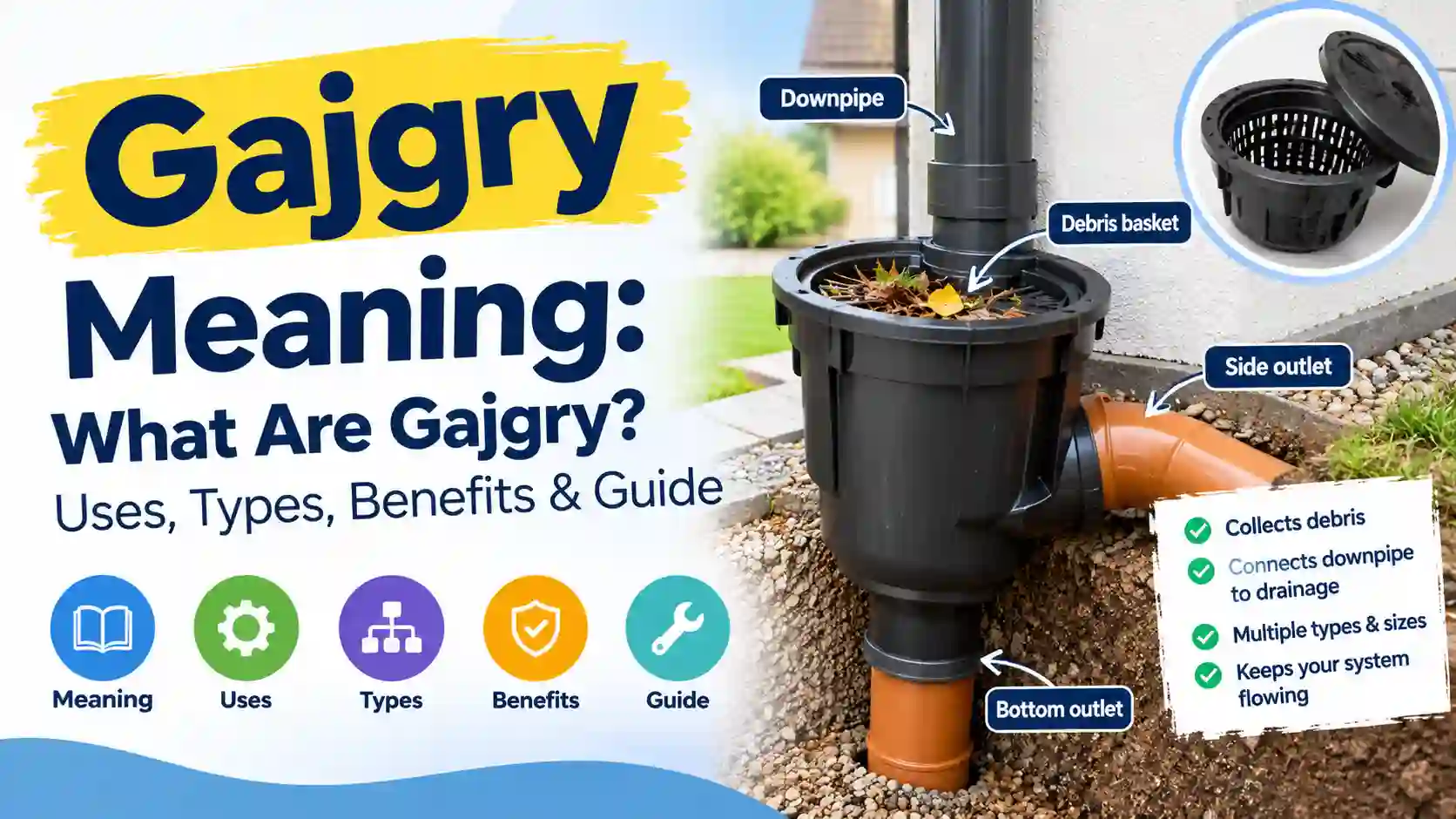
Gajgry: Meaning, Uses, Types, Benefits & Maintenance Guide
Introduction
When I first encounter an unfamiliar technical word such as gajgry, I believe the most useful approach is to identify what the term actually describes rather than assuming it is a general word with a broad meaning. In this case, the evidence points to a specific drainage component associated with roof rainwater systems. The Czech singular form is gajgr, while gajgry is the plural form. Czech Wiktionary defines a gajgr as a transition component between a gutter pipe and horizontal sewer drainage.
In practical terms, I would describe gajgry as drainage fittings installed where roof runoff moves from a downpipe toward an underground drainage system. Depending on the design, a gajgr can provide a connection point, catch debris carried from the roof, offer access for inspection and cleaning, and in some models help prevent unpleasant drainage odors from traveling back toward the downpipe. Product specifications vary, so I would not assume that every gajgr has exactly the same internal construction.
The word can be confusing because online content sometimes uses unusual keywords without a clear technical explanation. From my analysis of available sources, however, the strongest documented meaning of gajgry is connected to roof-water drainage rather than a general digital concept or ordinary English vocabulary. This distinction matters because choosing or maintaining the wrong type of drainage fitting can affect how effectively rainwater moves away from a building.
Key Takeaways About Gajgry
- Gajgry is the plural form of the Czech word gajgr.
- A gajgr is associated with roof rainwater drainage.
- It is typically positioned between a roof gutter downpipe and underground drainage.
- Many models are designed to catch leaves, moss, dirt, and other debris before it reaches buried pipes.
- Some models include a removable debris basket.
- Some designs include a dry or odor-control flap.
- Gajgry can have bottom, side, or other connection arrangements depending on the installation.
- Correct pipe dimensions and connection orientation are important when selecting a unit.
- Maintenance generally involves inspecting and cleaning the debris-catching area.
- A gajgr is not the same thing as a general yard drain, although both can be involved in surface-water management.
- The exact features, dimensions, materials, and load ratings depend on the individual product.
What Does Gajgry Mean?
The most useful starting point is the linguistic meaning. Czech Wiktionary lists gajgr as a masculine inanimate noun and gives gajgry as one of its plural forms. Its definition describes the component as a transition between a gutter pipe and horizontal sewer drainage.
In English-language explanations, the same type of component may be described using terms such as a roof-water catch basin, rainwater gully, downpipe trap, roof-drainage debris trap, or roof-water sediment collector. These descriptions are not necessarily exact one-to-one translations, but they help explain the function to readers who have never encountered the Czech term.
I think the easiest way to visualize a gajgr is to imagine the complete path of rainwater. Rain falls on a roof, moves into the gutters, enters a vertical downpipe, and then needs to continue into a suitable drainage system. The gajgr is positioned at this transition point in systems where such a fitting is specified.
The term is therefore much more specific than simply saying “drain.” Its role relates to the connection and management of water coming from the roof.
How Does a Gajgr Work?
A gajgr works as part of a larger rainwater drainage system rather than as an isolated device. Water first lands on the roof and flows toward the roof gutters. The gutters direct that water toward vertical downpipes. The downpipe then carries the water toward the gajgr.
Inside many designs, there is a basket, screen, grate, or other debris-catching arrangement. Leaves, moss, small pieces of dirt, and other material can be carried downward with rainwater. The collection component is intended to intercept some of that material before it continues into the underground pipework. Several commercial descriptions specifically identify debris collection as a key purpose of gajgry.
After passing through the appropriate section of the fitting, the water continues toward an underground rainwater pipe, drainage network, soakaway, retention system, or another destination permitted by the property’s drainage design.
This arrangement gives the system a practical maintenance point. Instead of allowing every piece of roof debris to enter buried pipework, the debris can be collected in a location that is more accessible for inspection and cleaning.
Why Are Gajgry Used in Rainwater Drainage?
The primary reason for using gajgry is to manage the transition between above-ground roof drainage and underground water disposal while providing protection against debris entering the buried system.
Roof surfaces naturally collect material. Depending on the surroundings, this can include leaves, moss, small twigs, dust, sand, fragments of roofing material, and other particles. During rainfall, some of this material can move into gutters and downpipes.
If debris enters an underground pipe and accumulates there, access for cleaning may be more difficult than it would be at an accessible collection point. A gajgr can therefore create a practical inspection and collection location.
CHUDĚJ, a manufacturer of these products, describes gajgry as roof-runoff debris traps and provides multiple configurations designed for different connection arrangements. Its product range includes bottom and side versions, different diameters, odor-control components, and debris-catching baskets.
From my perspective, the important point is that a gajgr is not merely an ornamental or optional-looking box attached to a downpipe. It can serve a functional role in the overall drainage design, although whether a particular building needs a specific model depends on its drainage layout.
Main Parts of a Gajgr
The exact internal design changes from one product to another, but several components commonly appear in descriptions of gajgry.
Main Body
The main body forms the housing through which water passes. It needs to withstand the environmental conditions associated with outdoor or buried installation, depending on the model.
Many modern plastic versions use polypropylene or similar materials. One PRO-DOMA product listing, for example, identifies polypropylene for the body and describes UV stabilization and a specified load class for that particular product.
Debris Basket or Grate
A removable basket is particularly useful because it gives the owner or maintenance worker a place to collect leaves and other material.
Not every model uses exactly the same arrangement. Some versions use a removable basket, while particular side-entry models may use a built-in grille instead. Product-specific documentation should therefore be checked before assuming that a basket can be removed.
Inspection Cover
An accessible cover allows the internal area to be inspected and cleaned. The exact cover design depends on the product and installation.
Outlet
The outlet is the part that connects the gajgr to the underground drainage pipe. Correct diameter and orientation are essential because the outlet must match the rest of the drainage system.
Odor-Control Component
Some gajgry include a dry flap or another odor-control mechanism. Product descriptions state that these components can help prevent unpleasant odors from the connected drainage system from traveling backward through the fitting.
Types of Gajgry
I would avoid treating “gajgry” as a single standardized product because manufacturers offer different configurations. The correct choice depends on how the downpipe and underground drainage pipe are positioned.
Bottom-Outlet Gajgry
A bottom-outlet model sends water downward into the connected drainage system. This arrangement can be suitable when the underground pipe is positioned beneath the fitting.
Some products are available with DN110 or DN125 connections, although the appropriate dimension must be determined from the actual drainage design rather than assumed from a general recommendation.
Side-Outlet Gajgry
A side-entry or side-outlet design directs the water horizontally toward the underground pipe.
This can be useful where the buried drainage pipe runs laterally from the downpipe position. CHUDĚJ lists side versions among its gajgr products, including configurations designed for different pipe dimensions.
Rear-Connection Designs
Some drainage systems require a rear connection rather than a simple bottom or side arrangement. Manufacturer catalogs include products described as having rear inflow configurations.
Plastic Gajgry
Plastic products are widely available and can offer relatively low weight and resistance to outdoor environmental conditions. Specific material and load properties differ between products.
Cast-Iron or Heavy-Duty Versions
Some manufacturers and suppliers also list versions with cast-iron surfaces or heavier-duty construction. These may be appropriate where the installation has greater surface-loading requirements, but the correct choice depends on the actual site conditions and manufacturer’s specifications.
Gajgry Types Compared
The following table helps separate the main configurations without suggesting that one type is universally better than another.
| Type | Typical connection direction | Potential application | Main consideration |
|---|---|---|---|
| Bottom outlet | Downward | Underground pipe below the fitting | Vertical alignment |
| Side outlet | Horizontal | Underground pipe running away from the downpipe | Available lateral space |
| Rear connection | Toward rear | Specialized drainage layouts | Site-specific orientation |
| Plastic body | Depends on model | Residential and general installations | Material and load requirements |
| Heavy-duty/cast surface | Depends on model | Areas with greater surface loading | Structural/load rating |
The key takeaway is that the outlet direction should follow the drainage layout. I would choose the configuration based on the existing or planned pipe route rather than selecting a model simply because its appearance seems convenient.
Where Are Gajgry Used?
Gajgry are primarily associated with roof rainwater drainage. They can appear in residential properties, garages, cottages, commercial buildings, industrial structures, and other buildings where roof runoff needs to be transferred into underground drainage.
A manufacturer product category identifies applications involving residential buildings, recreational properties, and industrial halls.
Their usefulness becomes especially clear where the drainage system is buried. Underground pipes are not as convenient to inspect as an exposed downpipe. Having a collection and inspection point near the bottom of the downpipe can make routine maintenance more manageable.
For example, imagine a house surrounded by several mature trees. During autumn, leaves may enter the roof drainage system. A properly selected debris-catching fitting can intercept some of that material before it travels farther into the buried pipe network.
That does not mean the fitting eliminates the need to clean the roof gutters. Instead, it adds another protective and maintenance point within the drainage system.
Gajgry and Roof Debris Management
Roof debris is one of the most practical reasons these fittings are useful.
Leaves can enter gutters during windy weather. Moss can loosen from roof surfaces. Fine sediment can accumulate over time. Small pieces of material can also be carried by rainwater.
A gajgr’s basket or grate can catch some of this material. The owner can then remove the debris manually rather than allowing it to continue through the entire drainage network.
A commercial description of gajgry specifically identifies protection of the drainage system from solid debris such as roofing fragments, sand, and leaves as a major function.
However, I would emphasize one limitation: a debris basket does not make a drainage system maintenance-free. The material that is successfully captured still has to be removed.
Gajgry and Odor Control
Some gajgry incorporate an odor-control flap. This feature addresses a different problem from debris collection.
If a roof drainage connection is connected to a drainage system where unpleasant odors could travel backward, an appropriate barrier can help limit that movement. PRO-DOMA’s product documentation describes a dry odor-control flap for this purpose.
The exact behavior of an odor-control component depends on the product design and the connected drainage system. I would therefore avoid claiming that every gajgr automatically prevents odors.
Instead, the practical lesson is simple: if odor control matters for the installation, check whether the chosen model specifically includes the appropriate feature.
Gajgry Compared With Ordinary Ground Drains
It is easy to confuse a gajgr with a general surface drain because both can be involved in water management.
A ground drain typically collects water from a surface such as a patio, driveway, walkway, or paved area. A gajgr is specifically associated with the transition from a roof downpipe to underground drainage.
The inlet design is therefore important.
| Feature | Gajgr | General ground drain |
|---|---|---|
| Primary water source | Roof runoff through downpipe | Surface water |
| Typical location | At or near bottom of roof downpipe | Ground, paving, driveway, patio |
| Main function | Connect roof runoff to underground drainage and catch debris | Collect surface runoff |
| Debris handling | Often includes basket or grate | Depends on drain design |
| Odor-control option | Available in some models | Depends on product |
| Connection style | Designed around downpipe/drainage connections | Depends on surface drainage layout |
The main distinction is the source of water. A gajgr is part of a roof rainwater pathway, whereas a general ground drain is normally designed to collect water directly from a surface.
How to Choose the Right Gajgr
Choosing a gajgr should begin with the drainage system rather than the appearance of the fitting.
Check the Downpipe Size
First, identify the diameter or dimensions of the existing downpipe. A mismatch can make installation difficult or require additional connectors.
Check the Underground Pipe Size
The underground outlet must correspond with the pipe it is intended to connect to. Products are available in different dimensions, including DN110, DN125, DN110/125, and DN160 in some product ranges.
Check the Outlet Direction
Determine whether the buried pipe is positioned below, beside, or behind the downpipe. This will help establish whether a bottom, side, or other configuration is appropriate.
Consider Debris Collection
If the property is surrounded by trees or the roof regularly collects material, an accessible debris basket can be particularly useful.
Check Load Requirements
If the fitting is installed in an area exposed to pedestrian or vehicle loading, the relevant load rating must be checked. One PRO-DOMA model, for example, lists a K3 load classification of 300 kg, but that figure applies to the specified product and should not be generalized to every gajgr.
Consider Climate and Installation Conditions
The fitting may be exposed to freezing temperatures, moisture, soil pressure, ultraviolet exposure before burial, and physical loading. The manufacturer’s technical documentation should be used to determine whether the product is suitable for the intended environment.
Step-by-Step Approach to Installing a Gajgr
I would treat installation as a drainage-design task rather than simply a matter of attaching one pipe to another.
Step 1: Identify the Existing Drainage Layout
Trace the route from the roof gutter to the downpipe and then toward the underground pipe. Establish where the fitting needs to sit.
Step 2: Measure the Connections
Measure the downpipe and underground pipe dimensions. Do not rely solely on visual estimates.
Step 3: Select the Connection Orientation
Choose a bottom, side, rear, or other configuration based on the pipe layout.
Step 4: Establish the Correct Height
The fitting must be installed at a suitable level relative to the downpipe, surrounding ground, and underground pipe. Incorrect elevation can interfere with drainage flow or the final surface finish.
Step 5: Connect the Pipes Correctly
Follow the manufacturer’s instructions for joining pipes, seals, adapters, and the fitting itself.
Step 6: Check the Cover and Access
The inspection or cleaning point should remain accessible after installation.
Step 7: Test Water Flow
After installation, water should be introduced carefully to verify that it moves through the intended route without leakage or unexpected overflow.
For complex underground drainage work, I believe professional assistance is sensible because the consequences of incorrect levels or pipe connections may not become obvious until significant rainfall occurs.
Common Problems With Gajgry
A gajgr can only work properly when the surrounding drainage system is also functioning correctly.
Blocked Basket
A full basket restricts water flow. Regular inspection is therefore important.
Blocked Outlet
Even when the basket is clean, debris can sometimes move beyond the collection area or accumulate near the outlet.
Incorrect Connection
A poorly matched pipe connection can leak or restrict flow.
Damaged Cover
A damaged cover can allow unwanted material into the system and may create a safety or maintenance issue depending on its location.
Incorrect Installation Height
If the fitting is positioned incorrectly relative to the finished ground level, access, drainage flow, or surface finish can become problematic.
Frozen or Unsuitable Components
Some historical drainage designs used water traps or other arrangements that may not be suitable for every climate. CHUDĚJ’s historical discussion notes that traditional Geiger-type designs with water seals could have freezing-related limitations in some conditions.
Maintenance Guide for Gajgry
Maintenance is one of the simplest ways to preserve the usefulness of a gajgr.
I would begin by checking the fitting after periods when the roof is likely to have accumulated substantial debris, particularly after storms or seasonal leaf fall.
Open the accessible cover according to the manufacturer’s instructions and inspect the basket or grate. Remove leaves, moss, dirt, and other accumulated material.
Next, check whether water can pass freely toward the outlet. If water remains unusually high or drains slowly, the problem may not be limited to the basket.
Inspect visible connections for leakage, movement, cracking, or damage. If the fitting is buried or difficult to access, more extensive drainage work may require a qualified professional.
The correct cleaning interval cannot be reduced to one universal number because the amount of debris varies substantially between properties. A building beneath large trees may need attention more frequently than a building in an open area.
Maintenance Checklist
| Inspection item | What to check | Why it matters |
|---|---|---|
| Cover | Damage, movement, accessibility | Keeps the fitting protected and serviceable |
| Basket/grate | Leaves, moss, sediment | Prevents restricted flow |
| Outlet | Signs of blockage | Helps maintain drainage capacity |
| Body | Cracks or deformation | Damaged components may leak |
| Connections | Loose or leaking joints | Prevents uncontrolled water escape |
| Odor-control flap | Correct condition and movement | Supports intended odor-control function |
| Surrounding ground | Erosion or standing water | May indicate drainage problems |
The most important maintenance principle is simple: do not wait for visible flooding before checking a debris-catching component. Routine inspection is easier than dealing with a blocked underground drainage line.
Benefits of Using Gajgry
The benefits depend on the specific installation, but several practical advantages are well supported by product descriptions.
Debris Interception
A basket or grate can capture material before it reaches buried drainage pipes.
Easier Inspection
The fitting creates an accessible point for examining the transition between the downpipe and underground drainage.
Easier Cleaning
Collected debris can be removed from an accessible fitting instead of being allowed to accumulate farther downstream.
Flexible Connection Options
Different outlet directions and dimensions make it possible to accommodate different drainage layouts.
Odor-Control Options
Certain models include dry flaps or other mechanisms designed to limit odor movement from connected drainage systems.
Integration With Different Properties
Gajgry can be found in systems associated with houses, recreational properties, commercial structures, and industrial buildings.
Limitations to Understand
I do not think it is useful to present gajgry as a universal solution for every drainage problem.
First, a gajgr cannot compensate for an incorrectly designed drainage network. If underground pipes are undersized, damaged, badly positioned, or unable to discharge water properly, installing a debris trap alone will not solve the underlying issue.
Second, a debris basket needs maintenance. A component that catches leaves is useful precisely because those leaves have to be removed.
Third, not every gajgr has the same features. Some include removable baskets, some use fixed grilles, some have odor-control components, and some have different connection configurations.
Finally, specifications such as dimensions, load ratings, materials, and certifications are product-specific. I would always verify the technical sheet for the exact model rather than applying specifications from one product to another.
What the Available Evidence Says About the Term
The documented Czech meaning provides the strongest linguistic foundation for the word. Wiktionary identifies gajgr as the singular noun and gajgry among its plural forms, defining the component as a transition between a gutter pipe and horizontal sewer drainage.
Commercial sources reinforce this interpretation. PRO-DOMA describes gajgry as devices for directing rainwater to drainage systems and catching impurities washed from roofs.
CHUDĚJ’s product information also lists multiple configurations and features, including different diameters, bottom and side versions, odor-control flaps, debris baskets, and load-related specifications.
These sources give us a much clearer picture than generic articles that simply repeat the keyword. In my view, the most defensible explanation is therefore that gajgry are roof-drainage fittings, specifically associated with collecting roof runoff and managing debris before water reaches underground drainage.
Practical Example: A House With Leafy Trees
Consider a hypothetical two-story house surrounded by mature trees.
During autumn, leaves fall onto the roof and enter the gutters. Rainwater carries some of those leaves toward the downpipes. If the drainage system includes a suitable gajgr with an accessible debris basket, some of that material can be intercepted near the bottom of the downpipe.
The homeowner can inspect the basket periodically and remove accumulated debris.
Without such an accessible collection point, some debris may travel farther into underground pipework. That does not automatically mean the buried pipe will become blocked, but cleaning a buried system can be more difficult than cleaning an accessible basket.
This example is hypothetical, but it illustrates why the location of a debris-catching component matters.
Practical Example: Choosing Between Bottom and Side Outlet
Imagine that a downpipe reaches the ground and the underground drainage pipe runs directly beneath the fitting. A bottom-outlet configuration may align naturally with that arrangement.
Now imagine that the underground pipe runs horizontally away from the building. A side-outlet model may fit the physical layout more naturally.
The point is not that one configuration is universally preferable. The correct selection depends on the direction and elevation of the connected drainage pipe.
Expert Recommendations for Selecting and Maintaining Gajgry
Based on the available product and technical information, I would use several principles when evaluating a gajgr.
First, identify the entire drainage route before purchasing a fitting. This prevents the common mistake of selecting a component based only on downpipe diameter.
Second, verify the exact connection dimensions. Product ranges can include multiple sizes, and a seemingly similar fitting may not have the same outlet specification.
Third, consider how the fitting will be accessed after installation. A debris trap hidden beneath paving may be much harder to maintain than one positioned with a practical service opening.
Fourth, consider local environmental conditions. A property surrounded by trees may place greater demands on debris collection than a property with little vegetation.
Fifth, check load requirements whenever the fitting is positioned in a trafficked or otherwise loaded surface.
Finally, keep the manufacturer’s documentation. If the fitting needs replacement years later, having its model and dimensions can make finding a compatible component much easier.
Two Important Facts to Remember About Gajgry
“přechodová část mezi okapovou rourou a ležatou kanalizací”
Czech Wiktionary, definition of gajgr
This short definition is useful because it captures the basic structural role of the component: it is a transition between roof gutter piping and horizontal drainage. My English explanation expands on that definition by considering the debris-catching and maintenance functions documented by manufacturers and suppliers.
“lapače střešních splavenin”
CHUDĚJ, s.r.o., product terminology for gajgry
The Czech phrase refers to roof-runoff debris collectors. This reinforces the practical distinction between a gajgr and a generic surface drain.
Conclusion
I believe the clearest way to understand gajgry is to think of them as specialized components within roof rainwater drainage systems. The singular Czech form is gajgr, and documented definitions describe it as a transition between a gutter pipe and horizontal drainage. Modern products can also provide a useful collection point for leaves, moss, sediment, and other debris carried from the roof.
From my analysis, the most important lesson is that gajgry should be considered as part of the complete drainage layout rather than as a standalone accessory. Connection diameter, outlet direction, installation level, load requirements, debris collection, and access for maintenance all matter.
We can reasonably conclude that there is no single universal gajgr design. Products vary in materials, dimensions, connection arrangements, baskets, grilles, covers, and odor-control features. The practical next step is therefore to identify the existing downpipe and underground drainage dimensions and then compare those measurements with the technical specifications of suitable products.
Regular inspection is equally important. A component designed to catch debris must itself be cleaned so that it can continue performing its intended function.
Read More: Frehf Meaning: What Does Frehf Mean? Definition & Uses
Frequently Asked Questions
What does gajgry mean?
Gajgry is the plural form associated with the Czech word gajgr, a drainage component used in connection with roof runoff. The documented definition describes a gajgr as a transition between a gutter pipe and horizontal sewer drainage. In practical building terms, it is commonly used between a roof downpipe and underground rainwater drainage, often with a debris-catching function.
What is a gajgr used for?
A gajgr is used to connect roof downpipe drainage with underground drainage while, in many designs, catching debris carried by rainwater. Depending on the model, it may include a removable basket, grille, inspection cover, or odor-control flap. The exact function and configuration depend on the product, so the manufacturer’s technical specifications should be checked before installation.
Is gajgry a Czech word?
Yes. The documented linguistic evidence identifies gajgr as a Czech noun and lists gajgry as a plural form. The definition concerns a transition component between gutter piping and horizontal drainage. This means the word is not simply a newly invented English expression; it has a documented technical meaning in Czech usage.
Are gajgry the same as gutter drains?
Not exactly. A gutter system collects water from the roof, while a gajgr is generally positioned farther along the drainage route, where the downpipe connects toward underground drainage. A gajgr can include debris-catching and odor-control features that are not necessarily present in a simple gutter outlet. The terms can overlap in casual explanations, but they describe different parts of a complete rainwater system.
Do all gajgry have a removable basket?
No. Many designs include a removable debris basket, but the internal arrangement varies. Some models may use a built-in grille or another collection mechanism. Product documentation from suppliers and manufacturers shows that different configurations exist, so I would verify the exact design before assuming that a particular basket can be removed.
Can a gajgr prevent drainage blockages?
A gajgr can help reduce the amount of larger roof debris entering underground drainage, but it cannot guarantee that the entire system will remain blockage-free. The basket or grille itself can become blocked and must be cleaned. Underground pipes can also develop problems independently. I therefore view a gajgr as one part of a drainage maintenance strategy rather than a complete substitute for inspection.
How often should gajgry be cleaned?
There is no universal cleaning interval because the appropriate frequency depends on factors such as nearby trees, roof conditions, rainfall, and the amount of material entering the drainage system. Properties with heavy leaf fall may require more frequent inspections. Checking the fitting after storms and during periods of substantial seasonal debris is a sensible maintenance practice.
Can gajgry be connected to rainwater tanks?
Some gajgry may form part of a rainwater collection route leading toward a storage tank, depending on the overall system design. Their debris-catching function can help reduce larger material entering downstream components. However, a gajgr is not a complete water-treatment or purification system. If collected rainwater will be used for a specific purpose, the entire collection and treatment system must be designed accordingly.
What sizes do gajgry come in?
Sizes vary by manufacturer and model. Product ranges can include dimensions such as DN110, DN125, DN110/125, and DN160. One manufacturer’s catalog, for example, lists several of these configurations. The correct size should be based on the actual downpipe and underground pipe dimensions rather than on a general assumption about what is “standard.”
Can I install a gajgr myself?
A simple replacement may appear straightforward, but new underground drainage installation can involve pipe levels, connections, seals, excavation, surface finishing, and drainage flow requirements. I would be particularly cautious when changing buried pipework or installing a new drainage route. For complicated installations, using a qualified drainage or building professional can reduce the risk of incorrect levels and connections.
Do gajgry help with bad smells?
Some models are specifically designed with dry odor-control flaps or similar components. These features are intended to limit the movement of odors from connected drainage systems. However, not every gajgr includes such a component. If odor control is important, check the exact product specification rather than assuming it is included.
What should I check before buying a gajgr?
I would check the downpipe size, underground pipe size, outlet direction, available installation depth, cover/access arrangement, debris-catching design, material, load rating, and any odor-control feature required by the installation. The manufacturer’s technical sheet is the most reliable source for product-specific measurements and limitations.
Sources and References
The linguistic definition and grammatical information for gajgr/gajgry are supported by Czech Wiktionary.
Product and application information was cross-checked against CHUDĚJ’s documentation and product category, which describes gajgry as roof-runoff debris collectors and lists multiple configurations and features.
PRO-DOMA product documentation was also reviewed for examples of specific gajgr construction, connection dimensions, odor-control components, materials, and load specifications. These specifications are product-specific and should not be generalized to all gajgry.
Additional context about installation and roof-drainage applications was checked against technical and building-related sources discussing gajgry and roof runoff.
Disclaimer
This article is provided for general informational purposes. Product dimensions, materials, load ratings, connection arrangements, installation requirements, drainage regulations, and permitted uses can vary by manufacturer, location, building design, and project conditions. I recommend checking the technical documentation for the exact gajgr being considered and consulting a qualified drainage or building professional where installation involves structural work, underground pipework, public drainage connections, or local regulatory requirements.
Frehf: Meaning, Framework, Uses, and What We Actually Know
Introduction
Frehf is an unusual term that has recently attracted attention in online searches, yet finding one universally accepted definition is not straightforward. When I look at the available information, I find several different explanations: some describe frehf as a structured framework for clarity, performance, and adaptability, while others present it as a creative concept, a digital term, or an acronym. That difference matters because readers searching for “frehf” may be looking for very different things.
In my analysis, the most clearly identifiable current interpretation is the framework associated with Frehf.org. That source describes frehf as a practical framework organized around four interconnected ideas: strategic alignment, data awareness, behavioral insight, and iterative improvement. The stated purpose is to help individuals and organizations deal with complexity, make clearer decisions, and adapt over time.
At the same time, I would not treat every description published online as an established definition. Some articles assign expansions such as “Future-Ready Enhanced Human Framework,” while other websites describe frehf as a creative or cultural expression. These explanations are not consistently supported by the same primary evidence. For that reason, I believe the safest way to understand frehf is to separate documented information from interpretations and speculation.
This article explains what frehf means in the context of the currently identifiable framework, how its four pillars work, where the concept may be useful, how it differs from familiar approaches such as OKRs and Agile, and what readers should consider before accepting broader claims about the term.
Key Takeaways About Frehf
The first important point is that frehf does not currently function like a conventional English word with one universally recognized dictionary definition. Its meaning depends heavily on context.
The second point is that a clearly identifiable use of frehf presents it as a framework rather than a conventional software application. The framework focuses on connecting objectives with actions, using information intelligently, understanding human behavior, and making incremental improvements.
The third point is that frehf does not necessarily require specialized technology. The framework’s own description states that it can be applied using ordinary methods, including pen and paper, although optional templates may be available.
The fourth point is that frehf should not automatically be treated as an acronym. Online sources sometimes provide proposed full forms, but those expansions should be distinguished from the framework’s own description.
Finally, I believe the most useful way to approach frehf is practically. Instead of asking only what the word means, we can ask what problem the framework is intended to solve and how its ideas could be applied to real decisions, projects, teams, or workflows.
What Is Frehf?
Frehf is currently presented most clearly as a structured framework for clarity, performance, and long-term adaptability. Its central idea is that successful execution requires more than setting goals. People and organizations also need to understand the information surrounding those goals, recognize behavioral factors, and adjust their approach as new evidence becomes available.
The framework identifies four interconnected pillars: Strategic Alignment, Data Awareness, Behavioral Insight, and Iterative Improvement.
Strategic alignment concerns the relationship between what an individual or organization wants to achieve and the actions, resources, and priorities used to pursue that objective. A goal can look impressive on paper but still fail if daily activities are disconnected from it.
Data awareness focuses on using useful signals rather than becoming overwhelmed by information. The idea is not simply to collect more data. Instead, we need to identify information that can help us understand progress, detect problems, and make decisions.
Behavioral insight introduces the human element. Plans are executed by people, and people’s motivation, habits, cognitive biases, communication patterns, and sources of friction can influence outcomes.
Iterative improvement is the final pillar. Rather than assuming that one large plan will remain correct indefinitely, the framework encourages smaller adjustments based on feedback.
When I put these four ideas together, frehf can be understood as a way of connecting planning, evidence, human behavior, and continuous adaptation.
What Does Frehf Mean?
The meaning of frehf depends on which source or context is being discussed.
In the framework interpretation, frehf represents a systematic approach to improving clarity and adaptability. It is not simply another word for productivity. Its structure attempts to connect strategic goals with information, human behavior, and repeated improvement.
Some online articles use “FREHF” as an acronym and suggest the expansion “Future-Ready Enhanced Human Framework.” I would treat that expansion cautiously because it is not the same as saying that the acronym has a universally established official meaning.
Other websites use frehf as a creative term associated with originality, digital culture, experimentation, or fresh ideas. These interpretations demonstrate why a search for the keyword can produce inconsistent results.
For readers, this creates an important distinction. A term can have an identifiable online usage without having a single authoritative meaning across the entire internet.
I believe the practical definition should therefore be stated carefully: frehf is currently used in some online contexts as the name of a structured framework for strategic alignment, data awareness, behavioral insight, and iterative improvement, while other interpretations remain less clearly established.
The Four Pillars of Frehf
The four pillars provide the clearest way to understand the framework. Each pillar addresses a different part of the process, but the concept becomes more useful when the four are considered together.
Strategic Alignment
Strategic alignment is about making sure that goals, resources, decisions, and daily actions point in the same general direction.
Imagine a company that says its main objective is to improve customer retention. If its marketing team focuses only on attracting new visitors, its product team prioritizes unrelated features, and its support team has no retention-related measures, the organization may have a stated goal without meaningful alignment.
The same problem can occur at an individual level. Someone might decide to learn a new professional skill but spend most of their available study time on unrelated topics. The goal exists, but the daily behavior does not support it.
A frehf-style approach would begin by connecting the larger objective to practical actions.
| Strategic Element | Practical Question |
|---|---|
| Goal | What are we actually trying to accomplish? |
| Resources | What time, people, money, or tools are available? |
| Actions | What activities directly support the goal? |
| Measures | How will we know whether progress is occurring? |
| Priorities | What should receive attention first? |
The important lesson is that alignment is not just about writing a goal. It is about creating a visible relationship between the goal and what happens afterward.
Data Awareness
Data awareness means paying attention to useful evidence rather than simply accumulating information.
In modern organizations, the problem is often not a lack of data. Companies may have dashboards, reports, analytics systems, surveys, financial information, customer feedback, and operational metrics. The challenge is deciding which signals actually matter.
A website owner, for example, might track thousands of analytics measurements but ultimately need only a few indicators to answer a particular business question.
For a hypothetical online store, useful signals could include conversion rate, abandoned carts, repeat purchases, and customer support complaints. These measurements can provide more actionable information than a large collection of unrelated statistics.
The framework’s emphasis on data awareness therefore encourages us to ask what information should influence a decision.
Behavioral Insight
Behavioral insight recognizes that systems do not operate independently of human behavior.
A perfectly designed process can fail if people find it confusing, inconvenient, unnecessary, or difficult to follow.
For example, an organization might introduce a new internal reporting system. Management may believe the system is efficient because it reduces paperwork. Employees, however, may avoid using it because the interface is confusing or because the reporting process takes significantly longer than the previous method.
The technical system has not necessarily failed. The implementation has failed to account sufficiently for behavior.
Behavioral insight asks questions such as:
- What motivates the people involved?
- Where does friction occur?
- What habits affect performance?
- Which decisions may be influenced by cognitive biases?
- What makes a process difficult to follow?
- How does communication affect participation?
This pillar makes frehf different from approaches that focus exclusively on targets and measurements.
Iterative Improvement
Iterative improvement means treating progress as a continuing process rather than a single event.
Instead of designing a large plan and assuming it will remain perfect, an iterative approach creates opportunities to review evidence and make adjustments.
A simple example would be a content team testing a new publishing workflow. Rather than redesigning every part of the process immediately, the team could introduce one change, observe what happens, identify friction, and then modify the process.
The same principle applies to personal learning. Someone studying a new subject could review their progress each week and change their study schedule based on what they actually understand rather than following an unchanged plan for months.
I see this as one of the most practical elements of frehf because changing circumstances are normal. A framework that allows adjustment can remain useful even when the original conditions change.
How Frehf Can Be Applied in Real Situations
A framework becomes meaningful when it can be translated into practical actions.
Consider a hypothetical small business that wants to increase online sales.
The business begins with strategic alignment by defining a specific commercial objective. It then identifies the resources available and connects marketing, website, customer service, and sales activities to that objective.
Next comes data awareness. The business examines relevant indicators such as traffic sources, conversion behavior, product interest, and customer feedback.
Behavioral insight then helps explain why customers may or may not complete purchases. Perhaps the checkout process is confusing, perhaps shipping information is unclear, or perhaps customers do not understand the product benefits.
Finally, iterative improvement allows the business to make changes, observe the results, and continue refining the process.
The point is not that frehf guarantees a particular outcome. Instead, it provides a structure for thinking about the problem.
The same approach can be adapted to personal projects.
Suppose I want to learn a new technical skill. Strategic alignment would mean connecting the learning goal to a realistic schedule. Data awareness could involve tracking completed lessons, practice results, and areas of weakness. Behavioral insight would require understanding procrastination, distractions, or difficulty maintaining consistency. Iterative improvement would involve adjusting the study approach based on what works and what does not.
This makes the framework applicable beyond large organizations.
Frehf for Business Planning
Business planning often fails because strategic statements remain disconnected from operational decisions.
A company might have a mission statement, annual objectives, departmental targets, and individual tasks, but these layers do not automatically align.
Frehf’s strategic alignment pillar can be used as a reminder to connect these levels.
For example, a hypothetical company might set the objective of improving customer satisfaction. The leadership team could identify customer experience as a priority, while individual teams define activities that contribute directly to that objective.
Data awareness would then determine which customer signals should be monitored.
Behavioral insight would consider how employees and customers interact with the process.
Iterative improvement would allow the company to revise procedures when evidence shows that the current approach is not working as expected.
This creates a feedback loop rather than a static plan.
Frehf for Project Management
Project management provides another useful application.
A project normally includes objectives, deadlines, resources, tasks, dependencies, and people. Problems arise when one of these elements changes but the rest of the plan remains unchanged.
Suppose a project is originally expected to take three months. Halfway through the work, a major requirement changes. Continuing to follow the original plan without reassessment may create unnecessary delays.
A frehf-oriented approach would encourage the team to reassess alignment, examine new information, consider human and operational effects, and adjust the plan.
This does not mean changing direction constantly. Iterative improvement should be based on meaningful evidence rather than random reactions.
Frehf and Personal Productivity
Frehf can also be interpreted at an individual level.
Personal productivity is often reduced to task lists and time management, but those tools do not answer every problem.
A person can have a perfectly organized calendar and still struggle to achieve meaningful goals.
Strategic alignment asks whether daily activities support important objectives.
Data awareness asks what evidence reveals about progress.
Behavioral insight asks why certain habits help or interfere with progress.
Iterative improvement asks how the routine can be adjusted.
For example, someone might discover that they consistently schedule difficult work during the least productive part of their day. Instead of simply blaming a lack of discipline, they could examine the pattern and change the schedule.
That is a small example of using evidence and behavioral understanding together.
Frehf Compared With OKRs
OKRs, or Objectives and Key Results, are commonly used to connect goals with measurable outcomes.
Frehf and OKRs can therefore overlap, particularly around strategic alignment and measurement. However, they are not necessarily identical concepts.
| Area | Frehf | OKRs |
|---|---|---|
| Primary emphasis | Alignment, data, behavior, and iteration | Objectives and measurable key results |
| Strategic alignment | Central pillar | Central component |
| Behavioral factors | Explicitly considered | May be considered but are not the core structure |
| Data | Data awareness is a dedicated pillar | Key results provide measurable indicators |
| Iteration | Explicitly emphasized | Often used through regular reviews |
| Relationship | Presented as a broader meta-framework | Goal-setting and performance framework |
The important point is that frehf does not necessarily need to replace OKRs. The framework itself describes frehf as capable of working alongside existing approaches.
In practice, an organization could use OKRs for goal definition while applying the broader frehf ideas to examine behavior, information quality, and iterative improvement.
Frehf Compared With Agile
Agile is another established approach that emphasizes adaptability, incremental delivery, feedback, and collaboration.
There is therefore considerable conceptual overlap between Agile and frehf.
The difference is largely in scope. Agile methods are commonly associated with software development and project delivery, although Agile principles are used more broadly. Frehf is presented as a meta-framework that can organize different methods around a broader structure.
| Area | Frehf | Agile |
|---|---|---|
| Main focus | Clarity, alignment, data, behavior, adaptability | Adaptive product and project development |
| Feedback | Important | Fundamental |
| Iteration | Core pillar | Core principle |
| Human behavior | Explicit pillar | Important through collaboration and team practices |
| Strategic alignment | Core component | Can be incorporated |
| Use | Broad organizational or individual contexts | Especially common in product and software environments |
These similarities explain why someone familiar with Agile may recognize parts of the frehf concept.
Rather than viewing them as automatically competing systems, it can be more useful to consider whether elements of both could address different parts of the same problem.
A Practical Frehf Workflow
A simple workflow can make the framework easier to understand.
Step 1: Define the Desired Outcome
Start by stating what you want to accomplish.
Avoid vague objectives such as “improve the business.” A more useful objective might be “reduce the number of abandoned customer inquiries” or “complete a defined training program.”
The exact objective will depend on the situation.
Step 2: Connect Actions to the Objective
List the major activities required to support the goal.
This is the strategic alignment stage.
Ask whether each important activity has a meaningful relationship with the desired outcome.
Step 3: Identify Useful Signals
Determine what information can show progress or reveal problems.
Not every available metric deserves attention. Choose information that can influence decisions.
Step 4: Examine Human Behavior
Consider the people involved.
Ask where confusion, resistance, motivation problems, communication issues, or unnecessary friction might appear.
Step 5: Make a Small Change
Instead of changing everything simultaneously, identify a practical improvement.
A smaller change can make it easier to understand what actually influenced the outcome.
Step 6: Review the Evidence
Look at what happened after the change.
If the result improved, determine why. If it did not, identify what needs adjustment.
Step 7: Iterate
Use the new information to refine the process.
This creates an ongoing cycle rather than a one-time plan.
Common Misunderstandings About Frehf
One common misunderstanding is assuming that every website using the term frehf is describing the same thing.
That is not supported by the current online material. Different websites use different definitions, which means readers should check the context before accepting a claim.
Another misunderstanding is that frehf is necessarily software.
The framework source explicitly describes it as something that does not require special software. That means it should not automatically be described as a downloadable application or digital product.
A third misunderstanding concerns the acronym “FREHF.” Some online sources provide an expanded form, but that does not establish it as the universal official meaning.
A fourth misunderstanding is assuming that a framework automatically produces better results.
A framework is a way of organizing thought and action. Its value depends on how appropriately it is applied, the quality of the information being used, and the circumstances in which it is implemented.
What Makes Frehf Different?
The most distinctive feature of the documented framework is the combination of four perspectives.
Traditional goal-setting can focus heavily on objectives.
Data-driven management can focus heavily on measurement.
Behavioral approaches can focus heavily on people.
Continuous improvement can focus heavily on iteration.
Frehf attempts to bring these elements together.
That combination can be useful because organizational and personal problems rarely belong to only one category.
A website problem may involve technology, customer behavior, business objectives, and incomplete data at the same time.
A workplace problem may involve strategy, communication, incentives, information, and processes.
A learning problem may involve goals, study data, motivation, habits, and repeated adjustments.
Looking at all these dimensions can produce a more complete picture than focusing on one dimension alone.
Advantages and Limitations of the Frehf Approach
The potential advantages of frehf come from its broad structure.
It encourages users to connect goals with actions rather than treating them separately. It also encourages attention to useful evidence and human behavior. Its iterative component recognizes that plans may need adjustment.
However, there are limitations.
First, the terminology is still unfamiliar to many people.
Second, the available independent documentation appears limited compared with mature frameworks such as Agile and OKRs.
Third, different online sources use the word in inconsistent ways.
Fourth, a framework with broad concepts can become vague if users do not translate those concepts into specific actions and measurements.
| Potential Strength | Potential Limitation |
|---|---|
| Connects strategy and execution | Terminology may be unfamiliar |
| Includes data awareness | Requires useful data |
| Considers human behavior | Behavioral analysis can be difficult |
| Encourages iteration | Too much iteration can become unfocused |
| Can work across different contexts | Broad frameworks can become vague |
| Does not require special software | Users must create practical implementation steps |
The most important takeaway from this comparison is that the framework’s usefulness depends on implementation. A broad conceptual model is only valuable when it helps someone make clearer decisions.
Examples of Frehf in Everyday Decisions
We can apply the same four pillars to ordinary decisions.
Imagine a person choosing whether to learn a new professional skill.
Strategic alignment means asking whether the skill supports the person’s broader career objective.
Data awareness could involve reviewing course completion rates, practice performance, job requirements, or other relevant information.
Behavioral insight could reveal whether the person learns better through practical exercises, videos, projects, or structured study sessions.
Iterative improvement would mean adjusting the learning method when the evidence shows that a particular approach is ineffective.
Another example is planning a website project.
The goal might be to improve the usefulness of a website for visitors. Strategic alignment connects content, design, technical work, and business objectives. Data awareness examines search behavior, engagement, conversions, and feedback. Behavioral insight considers how visitors navigate and where they encounter friction. Iterative improvement involves testing reasonable changes and reviewing their effects.
These examples show that frehf does not have to be restricted to a particular industry.
What the Current Evidence Does and Does Not Establish
When I examine the available material, I can establish that frehf is being used online as a named framework and that a primary source presents four specific pillars.
What I cannot responsibly establish is that every online meaning of frehf refers to the same framework.
I also would not describe every proposed acronym expansion as official unless the organization responsible for the term clearly confirms it.
Likewise, broad claims about widespread adoption, guaranteed performance improvements, or major cultural influence should not be treated as established simply because they appear in online articles.
This distinction is especially important for unfamiliar keywords. Search results can create an appearance of consensus when many pages repeat similar language without independent evidence.
A careful reader should therefore ask:
- Who originally defines the term?
- Is there a primary source?
- Are independent sources available?
- Does the claimed product or framework actually exist?
- Are specific examples documented?
- Are claims about effectiveness supported by evidence?
- Are different meanings being mixed together?
These questions are useful not only for frehf but for almost any emerging online concept.
Is Frehf a Software Product?
Based on the clearest primary-source description available, frehf should not automatically be classified as software.
The framework’s own presentation says that no special software is required and that basic tools can be used to apply its principles.
That does not prevent software from being used alongside the framework. Project-management applications, analytics platforms, spreadsheets, documentation systems, and other digital tools can support activities associated with strategic alignment, data awareness, behavioral analysis, and iteration.
However, using software to implement a framework is different from saying that the framework itself is a software application.
This distinction can prevent confusion for people who search for frehf expecting to download a program.
Who Might Find Frehf Useful?
Frehf may be relevant to people who need to organize complex goals or improve processes over time.
Potential users include business owners, project teams, managers, students, creators, consultants, and individuals working on personal projects.
The framework can be particularly understandable when a problem has several connected dimensions.
For example, a business may need to improve performance but not know whether the main problem involves strategy, customer behavior, operational friction, or insufficient information. The four-pillar structure provides categories for examining each possibility.
That does not mean frehf is automatically the right framework for every situation.
For a simple task, a basic checklist may be sufficient. For a mature software team, an established Agile methodology may already provide the necessary structure. For a goal-setting exercise, OKRs may be more familiar and directly applicable.
The practical question is therefore not whether frehf must replace existing systems. It is whether its structure helps clarify a particular problem.
How I Would Evaluate Frehf Claims
When I encounter an unfamiliar term like frehf, I prefer to separate evidence from interpretation.
First, I look for the primary source.
Second, I identify the exact definition used by that source.
Third, I compare it with independent material.
Fourth, I check whether claims about products, research, adoption, or results can actually be verified.
Finally, I avoid treating repetition as proof.
This approach is especially important with emerging internet terminology. A phrase can appear on dozens of websites without having a long-established meaning.
In my view, this is one of the most useful lessons associated with researching frehf itself: understanding a keyword requires examining its evidence, not simply counting how many pages mention it.
Verified Source Statements About Frehf
The primary source describing the framework presents frehf as a structured framework for clarity, performance, and long-term adaptability.
Its description identifies four interconnected pillars: strategic alignment, data awareness, behavioral insight, and iterative improvement.
It also states that frehf can work with existing approaches and that specialized software is not required.
These statements are useful because they provide a concrete description of the framework rather than relying entirely on speculation about the unusual name.
At the same time, the existence of a primary description does not automatically prove every claim that might be made about the framework’s effectiveness. Readers should distinguish between what the framework says it is designed to do and independently demonstrated outcomes.
Why the Meaning of Frehf Remains Unclear
The uncertainty around frehf has several possible explanations.
It may be a newly introduced name that has not yet developed a widely accepted meaning.
It may also be used by different online communities for different purposes.
Search-driven content can further increase confusion when websites publish explanations based on one another without identifying the original source.
Another factor is the structure of the word itself. “Frehf” does not immediately communicate a conventional meaning to an English-speaking reader. That makes people more likely to search for explanations and more likely to create interpretations.
Over time, a term can become more standardized if one meaning becomes dominant. At the moment, the available results show that multiple interpretations continue to exist.
Frequently Asked Questions
What does frehf mean?
Frehf is currently used online in several different ways, so it does not have one universally established meaning. The clearest documented interpretation presents frehf as a structured framework built around strategic alignment, data awareness, behavioral insight, and iterative improvement. Other websites use the word differently, including as a broader digital or creative concept. For that reason, I recommend looking at the context and identifying which definition a particular source is using before assuming that every reference to frehf means the same thing.
What is the frehf framework?
The frehf framework is presented as a structured approach for improving clarity, performance, and long-term adaptability. It contains four main pillars: Strategic Alignment, Data Awareness, Behavioral Insight, and Iterative Improvement. The idea is to connect goals and actions, use relevant information, understand human behavior, and make adjustments based on feedback. It is presented as a framework rather than a conventional software product, and its principles can be applied using ordinary planning and organizational tools.
Is FREHF an acronym?
Some online sources describe FREHF as an acronym and propose the expansion “Future-Ready Enhanced Human Framework.” However, this should not automatically be treated as a universally confirmed official full form. The clearest primary-source presentation of frehf focuses instead on its framework structure and four pillars. Therefore, when writing about the term, I would distinguish between a reported acronym expansion and a definition that is directly established by the source responsible for the framework.
Is frehf a software program?
Frehf should not automatically be described as software. The primary framework description indicates that no special software is required and that the approach can be applied using ordinary tools. Digital applications can certainly support its principles, such as project-management software, spreadsheets, analytics systems, or documentation tools. However, using technology to apply a framework is different from saying that the framework itself is a software application.
How does frehf work?
Frehf works by connecting four areas: strategic alignment, data awareness, behavioral insight, and iterative improvement. First, users clarify their goals and connect them with actions. Next, they identify useful information for evaluating progress. They then consider human behavior and sources of friction. Finally, they make practical adjustments based on what they learn. The process can be repeated as circumstances change. The framework therefore emphasizes an ongoing cycle rather than a single planning exercise.
Can frehf be used for personal productivity?
Yes, the framework can be interpreted in a personal productivity context. Strategic alignment can help a person connect daily activities with larger goals. Data awareness can involve tracking meaningful progress indicators. Behavioral insight can help identify habits, distractions, motivation problems, or sources of friction. Iterative improvement allows the person to modify the routine based on experience and evidence. The important point is to turn the broad concepts into specific actions rather than using frehf as a vague productivity label.
How is frehf different from OKRs?
Frehf and OKRs can overlap, but they are not identical. OKRs primarily provide a goal-setting structure based on Objectives and Key Results. Frehf is presented more broadly, combining strategic alignment with data awareness, behavioral insight, and iterative improvement. An organization could potentially use OKRs to define measurable objectives while applying frehf-style thinking to examine behavior, information quality, and ongoing adaptation. The two approaches therefore do not necessarily need to be treated as competing systems.
How is frehf different from Agile?
Frehf and Agile share an emphasis on adaptation, feedback, and iterative improvement. Agile is particularly associated with adaptive product and software development practices, while frehf is presented as a broader framework that can organize different methods around several connected areas. Because of this overlap, teams already using Agile may recognize some frehf principles. The practical difference is primarily one of structure and scope rather than a simple opposition between the two approaches.
Is frehf a real word?
Frehf is a real online search term because websites and other online material use and discuss it. However, that does not mean it is a standard English dictionary word or a universally recognized acronym. The available material suggests that frehf is an emerging term with multiple interpretations. Its meaning is therefore better understood through context and source attribution than through assuming that it has a single established dictionary definition.
Why are people searching for frehf?
People may search for frehf because they encounter the unfamiliar term online and want to know whether it refers to a framework, acronym, concept, product, or another type of digital terminology. The unusual spelling naturally creates curiosity. Search results currently contain multiple explanations, which can make the original question even more confusing. A useful approach is to identify the source behind the particular reference and determine exactly how that source defines frehf.
Conclusion
Frehf is an emerging online term whose meaning should be approached carefully because different sources use it in different ways. The clearest documented framework interpretation describes frehf through four connected pillars: strategic alignment, data awareness, behavioral insight, and iterative improvement.
I believe the most useful way to understand the concept is not to focus only on the unusual name. Instead, we can examine what the framework asks people to do: connect goals with actions, pay attention to meaningful evidence, understand the human factors behind decisions, and improve processes through repeated learning.
At the same time, I would avoid presenting every online claim about frehf as established fact. Proposed acronym expansions and broader cultural interpretations should remain clearly identified as interpretations unless stronger primary evidence confirms them.
For someone researching the keyword, the practical next step is to identify the context in which frehf appears and then evaluate the source behind that definition. That approach gives us a clearer understanding of the term while avoiding unnecessary speculation.
Read More: Nahttypen: Complete Guide to Seam Types and Sewing Tech
Sources and References
The article’s framework discussion is based primarily on the publicly available description of frehf as a structured framework and on a comparison of current online explanations of the term.
Key source: Frehf.org, which describes frehf through strategic alignment, data awareness, behavioral insight, and iterative improvement.
Additional current discussions reviewed include articles examining the meaning, framework interpretation, acronym claims, and uncertainty surrounding the term.
Disclaimer
This article is provided for general informational purposes. Frehf is an emerging term with inconsistent usage across online sources, and interpretations may change as more authoritative information becomes available. Claims about the term’s meaning, origin, effectiveness, adoption, or proposed acronym should be evaluated against primary and independently verifiable sources before being treated as established facts.
-
 Entertianment2 months ago
YarrList: What It Is, Safety, Legality, and Alternatives
-

 AI2 months ago
vrgamegirl19/comfyui-vrgamedevgirl: Features, Setup, Installation, and Safety Guide
-

 Business2 months ago
410 Terry Avenue N Seattle WA 98109: What Is at This Address?
-

 Health2 months ago
Hemp Gummies for Soothing Relief 750mg / 30 Count: Facts, Safety, Ingredients, and Evidence
-

 AI2 months ago
Open CoDesign: What It Is, Features, Setup, and How It Works
-

 Technology2 months ago
Application Compatibility Toolkit 5.0: Features, Installation, Testing, Fixes, and Modern Alternatives
-

 Guide2 months ago
Best Laptops for Writers in 2026: 7 Top Picks for Writing, Research, and Travel
-

 Business2 months ago
Doubtnut Valuation: From $154M Peak to $10M ALLEN Acquisition